Key Specifications
 Prime Delivery • 30-Day Returns
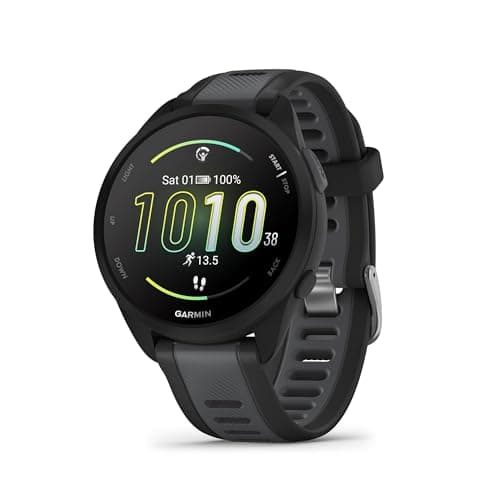
Garmin Forerunner 165, Running Smartwatch, Colorful AMOLED Display, Training Metrics and Recovery Insights, Black
The Garmin Forerunner is a running- and fitness-oriented smartwatch featuring built-in GPS, a bright AMOLED (or high-quality) touchscreen, and a lightweight 43 mm case. It aims to deliver accurate pace and distance tracking, heart-rate monitoring, multiple sport/activity profiles, and long battery life — making it suitable for regular runners, athletes, or anyone wanting a serious fitness watch rather than just a “smartwatch.”
Key Features
The Garmin Forerunner is a running- and fitness-oriented smartwatch featuring built-in GPS, a bright AMOLED (or high-quality) touchscreen, and a lightweight 43 mm case. It aims to deliver accurate pace and distance tracking, heart-rate monitoring, multiple sport/activity profiles, and long battery life — making it suitable for regular runners, athletes, or anyone wanting a serious fitness watch rather than just a “smartwatch.”
Available Colors
Available Styles & Variants
Key Considerations
Built-in GPS and accurate optical heart-rate sensors yield more reliable data. The better the sensors and algorithms, the more trustworthy your workout/health data will be.
Battery capacity and energy consumption (display, GPS, sensors) determine how practical the watch is for frequent use. A watch is more useful if it lasts multiple days without frequent charging — especially for daily wear, sleep tracking, or long training sessions.
A watch that supports multiple types of workouts — from running to cycling, HIIT, strength, etc. — offers better versatility and long-term value. Training plans, recovery tracking, and adaptive workouts improve training quality.
A watch that is comfortable, lightweight, water-resistant (or rugged), and with a clear, easy-to-read display remains practical for daily use, not just workouts.
A fitness-focused watch may deprioritize “smartwatch” features (notifications, calls, apps) but excel at fitness/health tracking and reliability. If your priority is training rather than phone-like features, this is fine. Otherwise, smartwatch-heavy devices may suit better.
Since this watch is built for runners/athletes, the reliability of GPS (for pace/distance) and heart-rate (for effort, recovery) is critical. If those are inaccurate, the usefulness drops significantly. The claimed ~11-day battery life in smartwatch mode makes the watch viable for daily wear (sleep, steps, notifications) without charging often, which encourages consistent use rather than sporadic — key for tracking progress over time.
These factors represent the most critical aspects that will impact your satisfaction with this product.
Customer Reviews
I’ve been really happy with my Garmin Forerunner 165. The battery life is good overall, though I do wish it didn’t drain as quickly during heavy use. Luckily, it charges back up very fast, so it never feels like a hassle.
I’ve been running for over 20 years and have only ever used by Apple Watch and before that my timex iron man running watch. Getting a dedicated running watch like this is a game changer. So many more metrics and options to use while running and to review after running has really made me a better runner.